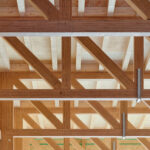
TUM.wood – circular building with wood
| Language: | German |
| Location: | Munich, Online |
| Duration: | 6 days in 4 weeks |
| Start: | TBA |
| Cost: | 3,350 EUR |
| ECTS: | 3 |

The TUM experts teach you scientific facts in a practical way and enable you to understand the requirements of planning and building with wood and to implement them professionally. The necessary knowledge of architecture, construction and regulations is covered as well as timber construction-specific planning processes, life cycle assessment and recycling management.
The TUM.wood further education program was launched by the network of the same name. It is a cooperation of eleven professorships at the Technical University of Munich, which deal with the topic of wood at various levels.
This certificate program can be credited with 8 DGNB continuing education points for licensed DGNB certification experts (DGNB Consultants, DGNB Auditors, DGNB Senior Auditors).
Benefits
01
1
Up-to-date Specialist Knowledge
02
2
Network of Experts
03
3
Individual Application
Program Overview
Here you will find information on the aims of this course and its content.Here you will find information on dates, requirements and other general conditions for the certificate program.Program:
TUM.wood – circular building with wood
Target group:
People working in architecture, construction, real estate or related public sector institutions who want to develop a deeper understanding of the requirements of timber construction. This include, but is not limited to, architects, interior architects, civil engineers, planners, building services engineers and project developers.
DGNB certification experts
Academic responsibility:
Prof. Dipl.-Ing. Architekt BDA Stephan Birk
Prof. Dr.-Ing. Stefan Winter
Dr.-Ing. Architektin Sandra Schuster
Format & Timing:
Online and on campus, 6 weeks
Study location:
Munich; Vorhoelzer Forum: Arcisstraße 21
Language:
Dates:
Application deadline:
TBA
Graduation:
After successful completion of the final exam, participants will receive a certificate from the Technical University of Munich.
ECTS:
3 ECTS
Creditability:
This certificate program can be credited with 8 DGNB continuing education points for licensed DGNB certification experts (DGNB Consultants, DGNB Auditors, DGNB Senior Auditors).
Participation fee:
3,350 EUR
Discounts:
Get to know our experienced lecturers who will teach you the certificate content and with whom you will work.Forest and Agroforest Systems, TUM
Chair of Architecture and Timber Construction, TUM
Lectureship Architecture and Civil Engineering, Augsburg University of Applied Sciences
Chair of Timber Structures and Building Construction
Head of Project Sales, Rubner Holzbau GmbH
Department of Architecture, Structural Design and Materials at the Technical University of Kaiserslautern
Head of the t-lab research focus on timber architecture and wood-based materials at the RPTU Kaiserslautern-Landau, Department of Architecture
Research Associate, Chair of Architecture and Timber Construction, TUM
HK Architekten Hermann Kaufmann + Partner ZT
Partner, Merz Kley Partner
Lattke Architekten, Technical University of Nuremberg
Co-Founder, LuftHygienePro
Associaten, Managing Director, bauart – Beratende Ingenieure
Member of the leadership team, Building Physics and Sustainability, Pirmin Jung
Chair of Design and Construction, TUM
Faculty of Interior Design, Architecture, and Design IAD, Technical University of Applied Sciences Rosenheim
Managing Director, Prause Holzbauplanung
Circular Construction, FH Münster
Chair of Architecture and Timber Construction, TUM
Partner at HKS Huß Kühfuss Schühle Architekten PartG mbB
Professor at University of Applied Sciences Munich
Ecosystem Dynamics and Forest Management in Mountain Landscapes, TUM
Co-Founder and Managing Director, vesta sustainability consulting
Chair of Timber Construction and Building Design, TUM
Group Director Sustainability & Innovation, Brüninghoff Group
Find out here how the course is structured and what the individual modules of the certificate program contain.- Wood architecture
- Timber construction and technical rules
- Timber construction planning
- Timber construction development
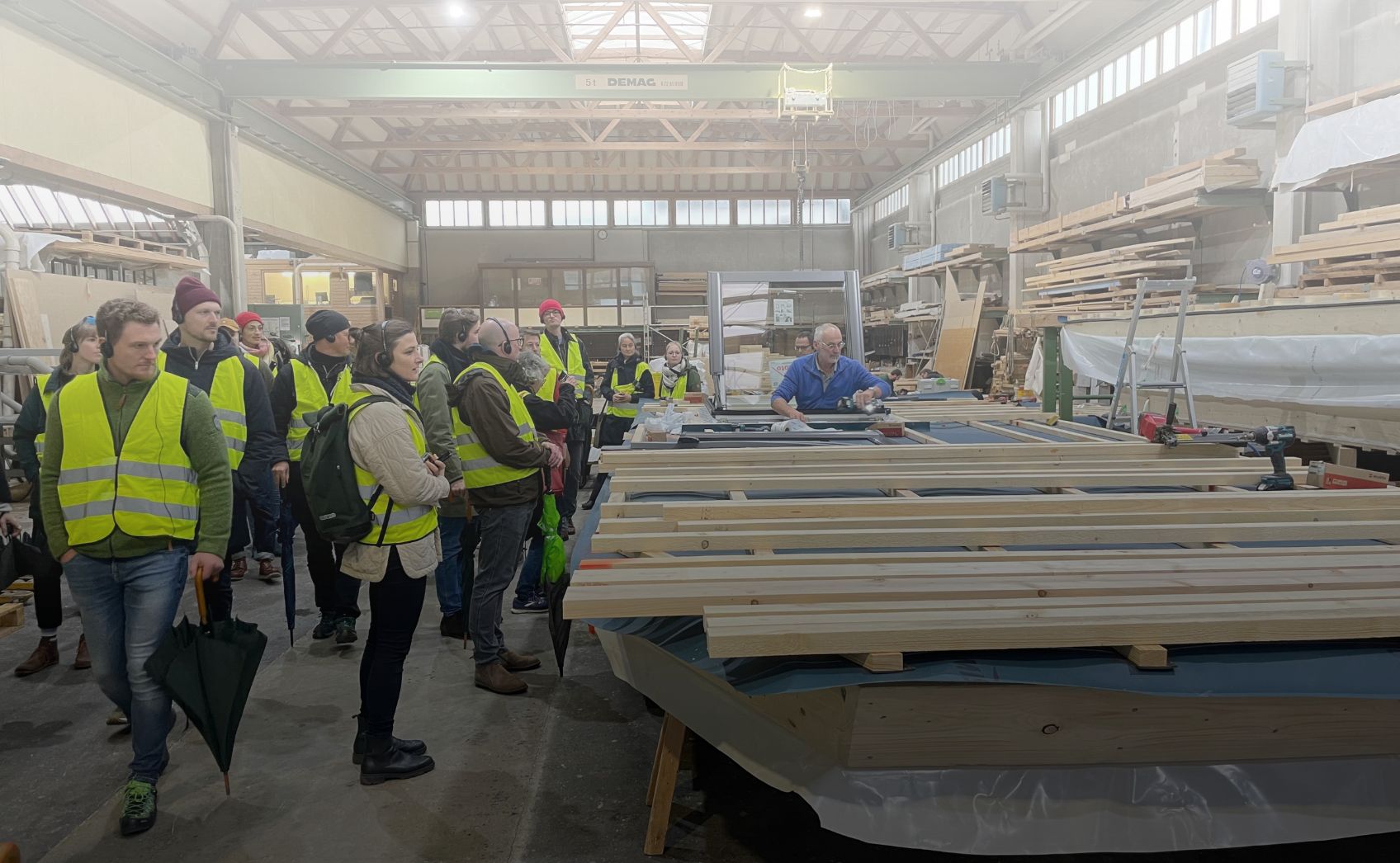
- Timber construction excursion
News & Insights
What Our Lecturers and Graduates Say
-


Timber construction has the potential to be reusable. We demonstrate which aspects of demountability are crucial for this – and how they can be integrated into design and planning strategies.
Dr.-Ing. Sandra Schuster -

In the circular Earth system, a circular economy is the greatest, perhaps only, chance of ensuring a peaceful existence for humanity. In order to preserve the carbon cycle, we need durable, unmixed and demountable structures in timber construction.
Prof. Dr. Anja Rosen -
We try to counteract the ever-increasing complexity in the construction industry: simply build!
Prof. Florian Nagler -

The TUM.wood program takes a holistic approach to teaching wood construction. A team of lecturers and experts from theory and practice gives participants a comprehensive insight into the wood value chain. This is particularly interesting for experienced architects.
René Rissland -
Wood as a material offers enormous design potential for architecture and engineering. It can be used in a wide variety of ways. What fascinates me about wood is not only the aesthetic expression of the material, but also the special tectonics and the precision of digital production methods.
Prof. Stephan Birk -
Using timber construction meaningful and with a sense of proportion – we want to impart the sound specialist knowledge for this.
Prof. Dr.-Ing. Stefan Winter -
Comprehensive knowledge of timber construction is the key to serving the exploding demand for building concepts with renewable raw materials.
Prof. Hermann Kaufmann
Partners






Info Sessions
Request form for certificate programs Executive & Professional Education
"*" indicates required fields